
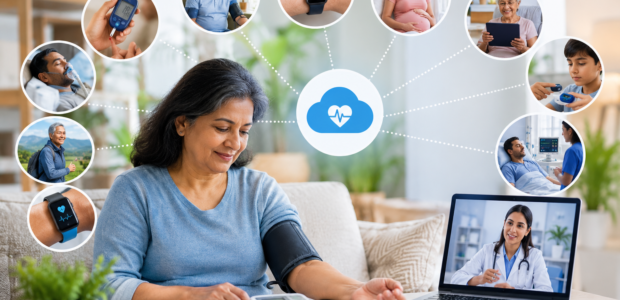

Remote patient monitoring (RPM) allows healthcare providers to collect and review patient health data outside traditional clinical settings. Using connected devices such as blood pressure monitors, glucose meters, pulse oximeters, and wearable sensors, healthcare teams can monitor important health indicators without requiring patients to visit a clinic for every checkup.
Remote patient monitoring has become useful across many areas of healthcare, particularly for patients who need regular monitoring or ongoing care. It can help healthcare organizations identify changes in a patient’s condition earlier, support chronic disease management, and reduce unnecessary hospital or clinic visits.
Here are some of the most important use cases for remote patient monitoring.
1. Managing Chronic Conditions
One of the strongest use cases for RPM is chronic disease management. Conditions such as diabetes, hypertension, heart disease, and chronic respiratory diseases often require regular monitoring.
Instead of relying only on periodic appointments, healthcare providers can receive patient data between visits. For example, a patient with hypertension can use a connected blood pressure monitor at home and share readings with their care team.
This gives clinicians more information about how a condition is changing over time and can support better-informed care decisions.
2. Monitoring Patients With Diabetes
Diabetes requires regular monitoring of blood glucose levels and other health indicators. RPM can make this process more convenient for patients and healthcare providers.
Connected glucose monitoring devices can collect readings and transmit information to approved healthcare systems or platforms. Care teams can review trends and identify readings that may require attention.
RPM can also help patients become more engaged in managing their condition because they can track their health information without making frequent trips to a healthcare facility.
3. Supporting Hypertension Management
High blood pressure often does not cause noticeable symptoms, making consistent monitoring important.
RPM allows patients to measure their blood pressure at home using connected devices. Healthcare providers can review readings over time instead of relying on a single measurement taken during an office visit.
Consistent data can help clinicians understand whether blood pressure is remaining within the patient’s target range or showing concerning changes.
4. Remote Cardiac Monitoring
Patients with cardiovascular conditions may require regular monitoring of heart rate, blood pressure, oxygen levels, or other health indicators.
Wearable devices and connected monitoring equipment can provide healthcare teams with information between appointments. This can be particularly useful for patients recovering from cardiac procedures or those who require ongoing cardiovascular monitoring.
RPM can help healthcare organizations maintain greater visibility into a patient’s condition while the patient remains at home.
5. Post-Discharge Patient Monitoring
The period immediately after hospital discharge can be important for recovery. Patients may still require monitoring even though they no longer need to remain in the hospital.
RPM can allow healthcare providers to continue collecting relevant health information after discharge. Depending on the patient’s condition, this may include temperature, blood pressure, heart rate, blood oxygen levels, weight, or other measurements.
This continued monitoring can help care teams identify potential changes that may require follow-up.
6. Supporting Older Adults at Home
Older adults may have multiple health conditions that require regular monitoring. Traveling frequently to healthcare facilities can also be difficult for some patients.
RPM allows certain health measurements to be collected from the patient’s home. Connected devices can make it easier for caregivers and healthcare teams to monitor relevant health information without requiring a patient to attend an appointment for every measurement.
For healthcare organizations supporting large numbers of older patients, RPM can also provide a scalable way to extend monitoring beyond traditional care settings.
7. Monitoring Respiratory Conditions
Patients with respiratory conditions may benefit from monitoring indicators such as blood oxygen levels, respiratory rate, and other relevant measurements.
Pulse oximeters and connected respiratory monitoring devices can transmit information to healthcare platforms. Providers can use this information alongside other clinical data to monitor changes in a patient’s condition.
This can be particularly useful when patients are recovering at home or require ongoing observation.
8. Supporting Maternal and Prenatal Care
RPM can also support certain aspects of prenatal and maternal healthcare. Depending on the care program, patients may use connected devices to record blood pressure, weight, blood glucose, or other health measurements at home.
Remote monitoring can reduce the need for some routine in-person measurements while giving healthcare teams additional information between appointments.
For patients who live far from healthcare facilities, this can make ongoing monitoring more convenient.
9. Monitoring Patients in Rural and Underserved Areas
Access to healthcare can be challenging for people living far from hospitals, clinics, or specialist providers.
RPM can help extend certain monitoring services beyond physical healthcare facilities. Patients can collect health measurements at home while healthcare professionals review the information remotely.
This can reduce some travel requirements and help healthcare organizations provide ongoing support to patients who may otherwise have difficulty attending frequent appointments.
10. Supporting Post-Surgical Recovery
Patients recovering from surgery may need to monitor specific health indicators during the recovery period.
RPM can provide healthcare teams with information from the patient’s home and help them follow recovery-related measurements. When combined with appropriate clinical protocols, remote monitoring can support communication between patients and care teams during recovery.
It can also reduce the need for some routine follow-up visits when an in-person assessment is not necessary.
11. Medication and Treatment Monitoring
RPM can complement medication management programs by providing healthcare providers with relevant patient data.
For example, changes in blood pressure, blood glucose, weight, or other measurements may provide useful information when clinicians evaluate how a patient is responding to a treatment plan.
RPM does not replace clinical judgment, but it can give healthcare teams more frequent information to consider alongside other patient records.
12. Supporting Hospital-at-Home Programs
Hospital-at-home programs allow certain patients to receive appropriate care outside a traditional hospital environment.
RPM can play an important role in these programs by connecting patients with healthcare teams through monitoring devices and digital platforms.
Healthcare organizations can collect selected patient measurements remotely while maintaining communication with the care team. Reliable technology and technical support are particularly important because device or connectivity problems can interfere with monitoring.
The Role of Technology in Successful RPM Programs
The effectiveness of remote patient monitoring depends on more than simply providing patients with connected devices. Healthcare organizations also need reliable networks, compatible software, secure data transmission, device management, and responsive technical support.
Common technical problems can include:
- Device connectivity failures
- Bluetooth or Wi-Fi problems
- Login and account issues
- Data synchronization errors
- Mobile application problems
- Device setup difficulties
- Software compatibility issues
- Missing or delayed patient readings
These problems can create additional work for clinical teams and affect the patient experience.
A dedicated healthcare IT help desk can assist patients, clinicians, and internal staff with technical issues. Support teams can troubleshoot devices, resolve connectivity problems, document incidents, and escalate complex issues when necessary.
Why 24/7 Technical Support Matters for RPM
Remote patient monitoring does not necessarily operate within standard business hours. Patients may use monitoring devices throughout the day and night, while healthcare organizations may have clinical teams working across different shifts.
A technical issue outside normal working hours can prevent patient data from being transmitted correctly.
24/7 technical support can provide an additional layer of operational continuity. Support teams can help troubleshoot device and software issues, assist users with basic technical problems, and escalate critical incidents according to established procedures.
For organizations operating large RPM programs, outsourced technical support can also provide additional capacity without requiring the healthcare provider to build a large in-house support team.
Conclusion
Remote patient monitoring has applications across chronic disease management, post-discharge care, cardiac monitoring, respiratory care, maternal health, senior care, and hospital-at-home programs.
Its value comes from allowing healthcare providers to collect relevant patient information outside traditional clinical settings. However, successful RPM programs require more than connected medical devices. Reliable technology, connectivity, software, device management, and technical support are all important components of the overall patient monitoring experience.
As healthcare organizations expand remote care programs, dependable IT and technical support can help keep RPM systems accessible and operational for both patients and clinical teams.