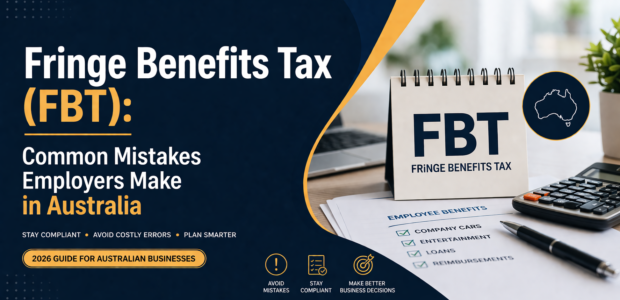

Fringe Benefits Tax (FBT): Common Mistakes Employers Make in Australia
Posts by stevejonasApril 17, 2026
Fringe Benefits Tax (FBT) is one of those obligations that often catches Australian employers off guard. Unlike income tax, it focuses on non-cash benefits provided to employees—things like company cars, entertainment, or expense reimbursements. While it may seem straightforward, FBT compliance can quickly become complex, especially when small errors lead to unnecessary penalties or overpayment.
What is Fringe Benefits Tax (FBT) in Australia?
For many businesses, the issue isn’t avoiding FBT—it’s understanding what triggers it, how to calculate it correctly, and how to report it accurately. This guide breaks down the most common FBT mistakes employers make in Australia and how to avoid them, while also aligning your approach with broader small business accounting and tax compliance strategies.
FBT is a tax employers pay on certain benefits they provide to employees or their associates (such as family members). It operates separately from income tax and is calculated based on the taxable value of the benefit, not the cost.
The FBT year runs from 1 April to 31 March, which is different from the standard financial year. This alone creates confusion for many businesses managing both tax return services and ongoing compliance obligations.
Common examples of fringe benefits include:
- Company vehicles used for private purposes
- Entertainment expenses (meals, events)
- Employee loans with low or no interest
- Reimbursements of personal expenses
Understanding what qualifies as a fringe benefit is the first step toward avoiding costly mistakes.
Why FBT Mistakes Are So Common
FBT errors often happen because employers focus heavily on income tax and GST but overlook non-cash benefits. Many businesses rely on internal processes that aren’t aligned with proper accounting services Perth standards or fail to maintain sufficient documentation.
Another challenge is that FBT rules frequently change or require interpretation. Without proper guidance from a tax accountant Perth, even small misunderstandings can lead to compliance risks.
Common FBT Mistakes Employers Make
Common FBT mistakes employers make include misclassifying benefits, poor record-keeping, incorrect car benefit calculations, and missing available exemptions. Many also fail to meet lodgement deadlines or integrate FBT with accounting systems. These errors can lead to penalties, higher tax liabilities, and compliance issues if not managed properly with accurate reporting and planning.
1. Misclassifying Benefits as Business Expenses
One of the most frequent errors is treating fringe benefits as normal business expenses. For example, reimbursing an employee’s personal expense might be recorded under general expenses instead of being assessed for FBT.
This mistake often arises when bookkeeping systems aren’t properly structured under effective small business accounting practices. Without clear categorisation, businesses may unknowingly underreport FBT liabilities.
2. Not Keeping Adequate Records
FBT compliance heavily depends on documentation. Employers must maintain:
- Logbooks for vehicle usage
- Receipts for expenses
- Employee declarations
Without these, it becomes difficult to justify exemptions or reductions. Poor record-keeping is a major issue for businesses lacking structured bookkeeping services Perth, leading to higher taxable values and potential ATO scrutiny.
3. Incorrectly Calculating Car Fringe Benefits
Company vehicles are one of the most common sources of FBT errors. Employers often:
- Use the wrong calculation method (statutory vs operating cost)
- Fail to maintain valid logbooks
- Ignore private use components
These mistakes can significantly increase FBT liability. Proper guidance through business advisory Perth services can help determine the most tax-effective method.
4. Overlooking Exemptions and Concessions
Not all benefits are taxable. Many employers miss out on legitimate exemptions such as:
- Minor benefits (under $300)
- Work-related items (laptops, tools)
- Certain remote area benefits
Failing to apply these concessions means businesses may pay more tax than necessary. This highlights the importance of proactive tax planning services Perth rather than reactive compliance.
5. Missing FBT Lodgement Deadlines
FBT returns must be lodged on time, typically by 21 May (or later if lodged through a registered agent). Missing deadlines can result in penalties and interest charges.
Businesses juggling multiple obligations like BAS lodgement and payroll reporting often overlook FBT deadlines, especially without a structured compliance calendar.
6. Not Integrating FBT with Payroll and Accounting Systems
FBT doesn’t operate in isolation. It impacts:
- Payroll reporting
- Employee income statements
- Superannuation considerations
Failing to integrate FBT into your broader accounting services Perth framework can create inconsistencies across financial records. This is especially risky during audits or when preparing annual financial statements.
7. Ignoring Employee Contributions
Employee contributions can reduce the taxable value of a fringe benefit. However, many businesses:
- Don’t track contributions correctly
- Fail to document them properly
- Miss opportunities to minimise FBT liability
A well-structured system supported by a tax return Perth specialist ensures these adjustments are accurately captured.
How to Avoid FBT Mistakes
1. Implement Strong Record-Keeping Systems
Accurate documentation is the foundation of FBT compliance. Using cloud-based tools and structured processes ensures every benefit is recorded correctly. Businesses that invest in proper bookkeeping services Perth often find it easier to manage FBT obligations throughout the year.
2. Seek Professional Guidance Early
Waiting until the end of the FBT year can lead to rushed calculations and missed opportunities. Engaging a qualified tax accountant Perth early helps identify potential issues and optimise your tax position.
3. Review Benefits Regularly
FBT isn’t a once-a-year task. Regular reviews of employee benefits allow businesses to:
- Identify new FBT liabilities
- Apply exemptions correctly
- Adjust strategies before year-end
This proactive approach aligns with effective business advisory Perth practices.
4. Align FBT with Overall Tax Strategy
FBT should be part of a broader tax planning strategy, not treated as a standalone obligation. Integrating it with your small business accounting and compliance processes ensures consistency and reduces risk.
Final Thoughts
Fringe Benefits Tax is often overlooked, but the consequences of getting it wrong can be significant. From misclassifying expenses to missing exemptions, even small mistakes can lead to higher tax liabilities and compliance issues.
The key is to treat FBT as an integral part of your financial management—not an afterthought. With the right systems, accurate record-keeping, and guidance from experienced professionals offering tax return services, accounting services Perth, and business advisory Perth, you can stay compliant while optimising your tax position.
If your business provides any kind of employee benefits, now is the time to review your FBT approach—before small errors turn into costly problems.