
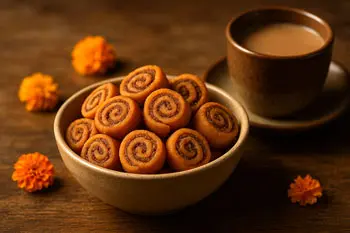

Bakarwadi: The Perfect Spiral of Indian Street Food Craftsmanship
Bakarwadi stands as a crowning achievement in the world of Indian savory snacks. This deep-fried, pinwheel-shaped delicacy bridges the culinary traditions of Maharashtra and Gujarat, offering an explosion of flavors in a single, bite-sized crunch. Unlike simple fried dough snacks, Bakarwadi requires meticulous assembly, balancing a delicate pastry shell with a highly complex, multi-layered spice stuffing. It is a staple during festive seasons like Diwali, yet remains a beloved daily accompaniment to afternoon tea across India.
The Anatomy of the Perfect Pinwheel
The magic of Bakarwadi lies in its structural engineering. To achieve its signature spiral look and contrasting textures, the snack is built from two distinct components:
- The Crisp Outer Crust: The exterior shell is crafted from a precise blend of gram flour (besan) and all-purpose flour (maida). Heated oil (moyen) is rubbed into the flour before kneading to guarantee a flaky, light texture. When deep-fried on low heat, this casing turns a beautiful golden brown, providing a loud, satisfying crunch.
- The Sweet-Spicy Stuffing: The interior core is a tightly packed mixture of dry roasted ingredients. Shredded coconut, poppy seeds (khus khus), and sesame seeds form the base. This mixture is pulverized with a heavy hand of spices, including red chili powder, cumin, coriander, and garam masala.
To bind the dry spices to the dough, a thick paste of tamarind and jaggery (unrefined cane sugar) is slathered onto shudh restaurant karol bagh the rolled dough before the spice mixture is scattered. The dough is then tightly rolled into a log, sliced into small rounds, and fried. The tamarind paste prevents the spice mixture from escaping into the frying oil, locking the intense flavors inside the spiral layers.
A Tale of Two States: Regional Variations
While the basic rolling technique remains identical, the flavor notes of Bakarwadi split into two distinct regional profiles:
- The Pune Tradition (Maharashtra): In Maharashtra, particularly in Pune, Bakarwadi leans heavily toward a harmonious balance of sweet, tangy, and mildly spicy notes. The use of poppy seeds and sweet coconut is prominent, resulting in a snack that pairs beautifully with a hot cup of masala chai.
- The Vadodara Tradition (Gujarat): Across the border in Gujarat, the profile shifts. Gujarati Bakarwadi tends to be smaller, drier, and significantly more fiery. Spice merchants often incorporate garlic, onion powder, or a heavier dash of black pepper into the filling, catering to a palate that favors sharp, pungent heat over sweetness.
Commercial Giants and Cultural Legacy
For decades, making Bakarwadi at home was an art passed down through generations, reserved for special occasions due to the labor-intensive rolling process. However, mid-20th-century commercialization made it a global phenomenon. Iconic sweetmeats shops, most notably Chitale Bandhu in Pune and Jagdish Farshan in Vadodara, automated the rolling process while preserving the authentic spice blends. Today, vacuum-sealed boxes of Bakarwadi are exported worldwide, allowing the Indian diaspora to enjoy this iconic snack anywhere in the world.
Whether homemade or store-bought, Bakarwadi remains a testament to the sophistication of Indian street food—a tiny, crispy wheel that delivers sweetness, heat, tang, and crunch all at once.