
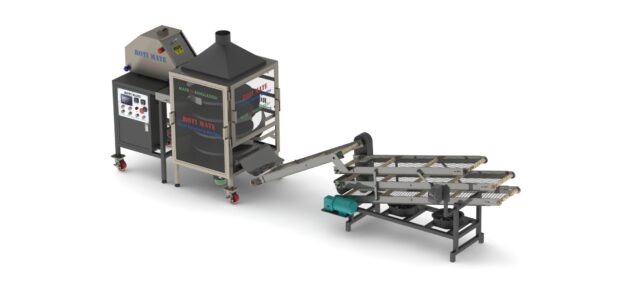

Cooling Conveyor Systems: Enhancing Product Quality and Production Speed
Posts by NoahjhonJune 13, 2026
In modern manufacturing environments, maintaining product quality while maximizing production efficiency is a top priority. Industries such as food processing, confectionery, pharmaceuticals, plastics, and industrial manufacturing often deal with products that require controlled cooling before packaging, storage, or further processing.
This is where a Cooling Conveyor becomes an essential part of the production line. By providing a controlled cooling process while continuously transporting products, these systems help manufacturers improve product consistency, reduce production bottlenecks, and increase overall operational efficiency.
As production demands continue to grow, businesses are increasingly investing in advanced Conveyor systems that not only transport products but also contribute directly to quality control and production performance.
What Is a Cooling Conveyor?
A Cooling Conveyor is a specialized conveying system designed to reduce the temperature of products while they move through the production process. Instead of stopping products for separate cooling operations, the system combines transportation and cooling into a single continuous process.
These systems are commonly equipped with:
- Air cooling mechanisms
- Fans and blowers
- Temperature control systems
- Ventilated conveyor belts
- Cooling chambers
The primary objective is to ensure products reach the desired temperature before proceeding to the next production stage.
Why Cooling Is Important in Manufacturing
Many products leave production equipment at elevated temperatures. If cooling is not managed properly, it can affect:
- Product quality
- Structural integrity
- Packaging performance
- Shelf life
- Production speed
A properly designed Cooling Conveyor helps manufacturers maintain consistent cooling conditions, ensuring products meet quality standards before packaging or distribution.
Improves Product Quality
One of the most significant advantages of a Cooling Conveyor is its ability to improve product quality.
Controlled cooling prevents problems such as:
- Product deformation
- Surface damage
- Shape inconsistencies
- Moisture-related issues
- Texture changes
By maintaining uniform cooling conditions, manufacturers can achieve consistent product characteristics across every production batch.
Food Industry Example
In food processing operations, products such as baked goods, chocolates, snacks, and confectionery items often require cooling before packaging.
A Cooling Conveyor ensures products cool evenly, helping preserve:
- Appearance
- Texture
- Flavor
- Product stability
This directly contributes to customer satisfaction and brand reputation.
Increases Production Speed
Traditional cooling methods often require products to be stored temporarily before further processing.
This can create delays and slow overall production.
A Cooling Conveyor eliminates this issue by cooling products while they are being transported. This continuous process reduces waiting times and allows production lines to operate more efficiently.
Benefits include:
- Faster processing cycles
- Higher production output
- Reduced bottlenecks
- Improved workflow management
For high-volume manufacturers, these efficiency gains can significantly improve operational performance.
Supports Continuous Production Flow
Production interruptions can lead to costly downtime and reduced efficiency.
A Cooling Conveyor helps maintain a smooth and continuous flow of products throughout the facility.
Instead of transferring products between separate cooling stations and transport systems, manufacturers can integrate cooling directly into the conveying process.
This creates:
- Better production coordination
- Reduced handling requirements
- Improved operational consistency
- Enhanced productivity
Continuous production flow is especially important in industries operating around the clock.
Reduces Product Handling
Every time a product is manually transferred between production stages, the risk of damage increases.
A Cooling Conveyor minimizes handling by combining transportation and cooling into a single automated process.
Reduced handling helps:
- Prevent product damage
- Improve hygiene standards
- Lower labor requirements
- Reduce contamination risks
Automation also contributes to greater production consistency and efficiency.
Enhances Food Safety and Hygiene
Food manufacturers must comply with strict hygiene regulations.
A modern Cooling Conveyor can be designed using food-grade materials and sanitary construction standards that support safe product handling.
Benefits include:
- Easier cleaning procedures
- Reduced contamination risks
- Improved food safety compliance
- Better production hygiene
These advantages make cooling conveyors a valuable asset in food and beverage manufacturing facilities.
Improves Packaging Efficiency
Products often need to reach a specific temperature before packaging.
Packaging hot products can lead to:
- Condensation
- Packaging damage
- Seal failures
- Reduced shelf life
A Cooling Conveyor ensures products are cooled to the appropriate temperature before entering the packaging stage.
This improves:
- Packaging quality
- Product presentation
- Storage stability
- Distribution performance
As a result, manufacturers can reduce waste and improve customer satisfaction.
Suitable for Various Industries
The versatility of a Cooling Conveyor allows it to serve a wide range of industrial applications.
Food Processing Industry
Cooling conveyors are commonly used for:
- Bakery products
- Chocolates
- Biscuits
- Snacks
- Confectionery items
Pharmaceutical Industry
Pharmaceutical manufacturers use cooling systems to control product temperatures during production and packaging processes.
Plastics Industry
Plastic components often require controlled cooling to maintain shape and dimensional accuracy.
Industrial Manufacturing
Various industrial products benefit from gradual cooling before assembly, storage, or transportation.
A well-designed Conveyor system can be adapted to meet the requirements of each industry.
Optimizes Production Space
Manufacturing facilities often face space limitations.
A Cooling Conveyor combines two critical functions, cooling and transportation, into a single integrated system.
This helps businesses:
- Save floor space
- Simplify production layouts
- Improve workflow organization
- Increase facility efficiency
Compact and efficient system design supports long-term operational growth.
Reduces Operational Costs
By increasing efficiency and reducing waste, a Cooling Conveyor can contribute to lower operating expenses.
Cost-saving benefits include:
- Reduced labor costs
- Lower product rejection rates
- Improved energy efficiency
- Faster production cycles
- Reduced handling expenses
Over time, these savings can provide a strong return on investment.
Easy Integration with Existing Conveyor Systems
Many facilities already operate various types of material handling equipment.
A Cooling Conveyor can often be integrated into an existing Conveyor network without major modifications.
This flexibility allows manufacturers to upgrade production capabilities while minimizing disruption to current operations.
Factors to Consider When Selecting a Cooling Conveyor
Before investing in a cooling system, businesses should evaluate:
- Product characteristics
- Cooling requirements
- Production volume
- Available space
- Energy efficiency
- Hygiene standards
- Maintenance requirements
Selecting the right system ensures optimal performance and long-term reliability.
Conclusion
A Cooling Conveyor plays a crucial role in modern manufacturing by improving product quality, increasing production speed, and supporting continuous operational flow. By combining cooling and transportation into a single automated process, manufacturers can reduce handling, improve efficiency, and maintain consistent product standards.
Whether used in food processing, pharmaceuticals, plastics, or industrial production, a reliable Conveyor system equipped with cooling capabilities helps businesses optimize operations while delivering higher-quality products to the market. As industries continue to prioritize automation and productivity, cooling conveyor systems remain a valuable investment for long-term manufacturing success.