
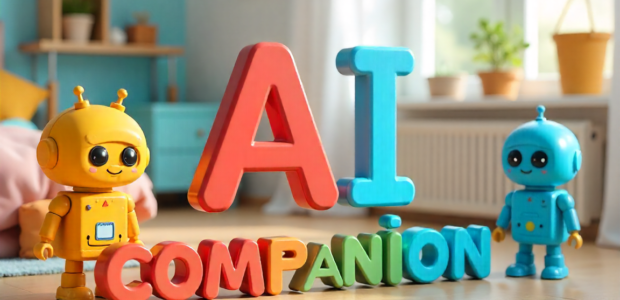

Digital interaction has evolved far beyond simple messaging apps, static websites, and rule-based chatbots. Today, users expect systems that understand context, remember preferences, and respond in a more human-like way. This shift has been largely driven by advances in Artificial Intelligence, especially in natural language processing and machine learning.
One of the most noticeable outcomes of this evolution is the rise of personalized AI companions—digital systems designed to interact with users in a way that feels adaptive, conversational, and emotionally aware. These companions are transforming how people communicate with technology, reshaping expectations across entertainment, productivity, education, and customer engagement.
What Are Personalized AI Companions?
Personalized free AI companions are intelligent software systems that simulate conversation while adapting to individual users. Unlike traditional chatbots that follow fixed scripts, these companions evolve based on user interactions.
They typically include:
- A conversational AI model
- A personality configuration system
- Memory for storing user preferences
- Adaptive response generation
The goal is not just to answer questions but to create a continuous interaction experience that feels unique to each user.
For example, one user may experience a professional and concise assistant, while another interacts with a friendly, casual conversational partner—all powered by the same underlying AI system.
Why Personalization Matters More Than Ever
In the early stages of digital communication tools, interactions were generic. Every user received the same type of response regardless of context. However, modern users expect relevance.
Personalization improves digital interaction in several key ways:
1. Better User Engagement
When an AI remembers a user’s preferences, tone, or previous conversations, the interaction feels more natural and engaging.
2. Reduced Cognitive Load
Users don’t need to repeatedly explain themselves. The AI already understands context.
3. Emotional Connection
Even though AI is not conscious, personalized responses can create a sense of familiarity and comfort.
4. Efficiency in Communication
Tasks are completed faster when the system understands user intent more accurately.
The Technology Behind AI Personalization
Personalized AI companions rely on several advanced technologies working together:
1. Large Language Models
Modern conversational systems are powered by models trained on massive datasets. These models generate human-like responses based on probability and context.
A key contributor in this space is OpenAI, which has developed widely used language models that form the foundation of many conversational systems today.
2. Memory Systems
Memory allows AI companions to store information such as:
- User names
- Preferences
- Past interactions
- Behavioral patterns
This creates continuity across sessions, making conversations feel less repetitive and more meaningful.
3. Context Awareness
Context-aware AI systems analyze ongoing conversations to understand intent. Instead of responding to isolated messages, they interpret full dialogue history.
4. Personality Engines
Developers can define personality traits for AI companions, such as:
- Formal vs casual tone
- Emotional warmth
- Humor level
- Communication style
This is what gives each AI companion a distinct identity.
How Personalized AI Is Changing Digital Interaction
The impact of personalized AI companions can already be seen across multiple areas of digital life.
1. From Tools to Experiences
Traditional software was designed as a tool—users input commands and receive outputs. Personalized AI companions shift this model into an experience-based interaction.
Instead of typing commands, users have conversations. Instead of static responses, they receive dynamic dialogue.
This shift makes digital interaction more intuitive and human-centered.
2. Smarter Customer Support Systems
Customer service has been one of the earliest adopters of AI companions. Personalized systems can:
- Remember past support tickets
- Understand customer frustration levels
- Offer tailored solutions
- Reduce wait times significantly
This leads to improved satisfaction and reduced operational costs for businesses.
3. Enhanced Learning Experiences
Education is another major area being transformed. AI companions act as:
- Personalized tutors
- Language learning partners
- Study assistants
Because they adapt to each student’s learning speed and style, they provide a more flexible educational experience than traditional systems.
4. Emotional and Social Interaction
Some users interact with AI companions for social engagement. These systems can simulate conversation, provide companionship-like interaction, and reduce feelings of isolation.
While they are not replacements for real human relationships, they offer an additional layer of digital interaction that feels responsive and attentive.
5. Productivity and Daily Assistance
Personalized AI companions are increasingly used for:
- Scheduling tasks
- Writing emails
- Generating ideas
- Managing workflows
Because they remember user habits, they become more efficient over time, acting like personalized digital assistants.
The Psychology Behind AI Personalization
The effectiveness of personalized AI companions is closely tied to human psychology.
Humans naturally respond positively to:
- Recognition
- Consistency
- Emotional feedback
- Memory-based interaction
When an AI system remembers past conversations, users subconsciously attribute higher intelligence and empathy to it. This perception strengthens engagement and trust.
However, it also introduces responsibility. Developers must ensure that users understand the limitations of AI systems.
Challenges in Personalized AI Systems
Despite their advantages, personalized AI companions face several challenges:
1. Privacy Concerns
Storing user data requires strong security and ethical handling practices.
2. Over-Personalization Risks
Excessive personalization may lead to dependency or unrealistic expectations from users.
3. Data Accuracy
Incorrect memory storage can lead to misleading responses.
4. Ethical Boundaries
AI systems must avoid manipulation or emotional exploitation.
Balancing personalization with safety is one of the most important design challenges in this field.
The Role of Emotional Intelligence in AI
One of the emerging trends is integrating emotional intelligence into AI systems. This means detecting user sentiment through text cues and adjusting responses accordingly.
For example:
- If a user sounds frustrated, the AI responds calmly
- If a user is excited, the AI mirrors enthusiasm
- If a user is confused, the AI simplifies explanations
This emotional adaptability significantly improves interaction quality.
Future of Personalized AI Companions
The future of AI companions is expected to become even more advanced with developments in multimodal AI (text, voice, and visual interaction combined).
We may see:
- AI companions integrated into AR/VR environments
- Real-time voice-based digital partners
- Fully customizable digital identities
- Cross-device memory synchronization
Eventually, AI companions may become deeply integrated into everyday digital ecosystems, acting as personalized assistants that accompany users across platforms.
Final Thoughts
Personalized AI companions are fundamentally reshaping how humans interact with technology. Instead of static systems that respond uniformly to everyone, we now have adaptive digital entities that evolve based on individual behavior and preferences.
Powered by advancements in Artificial Intelligence and driven by innovations from companies like OpenAI, these systems are making digital communication more natural, intuitive, and engaging.
As this technology continues to evolve, personalized AI companions will likely become an essential part of digital life—transforming not just how we use technology, but how we experience it.