
Introduction
An enquiry is only the beginning of a potential customer relationship. For service businesses, the real challenge is understanding what each prospect needs, deciding which opportunities deserve immediate attention, and ensuring that no valuable conversation gets lost. When enquiries arrive through websites, social media, phone calls, and messaging platforms, managing them manually can become difficult.
An AI CRM for service businesses can help bring customer information, sales activities, and communication into one organised system. Instead of relying on scattered spreadsheets and individual team members to remember every detail, businesses can create a more consistent process for managing enquiries. The goal is not simply to collect more leads but to understand them, respond appropriately, and guide suitable prospects towards the next stage of the sales journey.
Why Managing Enquiries Requires a Better Process
Customer Information Often Comes From Different Channels
Customers rarely follow one predictable path when contacting a business. Someone might discover a company through a social media advertisement, visit its website, and later send a WhatsApp message. If each interaction is managed separately, employees may struggle to understand the customer’s complete history.
This creates several practical problems. Team members may ask the same questions repeatedly, overlook earlier conversations, or provide inconsistent information. Prospects can also become frustrated when they need to explain their requirements more than once.
A centralised customer management process helps bring enquiries and interaction records together. Employees can review previous conversations, understand customer needs, and continue discussions without starting from the beginning.
Delayed Responses Can Reduce Customer Interest
People looking for services often contact multiple providers before making a decision. When one company responds quickly and another takes several hours, the more responsive business may have an advantage.
However, responding quickly is not enough on its own. Businesses also need to provide relevant information, ask useful questions, and identify the appropriate next step.
Automated acknowledgements, response reminders, and organised lead assignments can help teams maintain communication. These processes are especially valuable when employees are handling appointments, completing projects, or speaking with existing customers.
Building a More Organised Sales Workflow
Capture Every Enquiry in One Place
A reliable sales process starts with complete and accessible information. Businesses should establish a method for recording enquiries from their major communication channels.
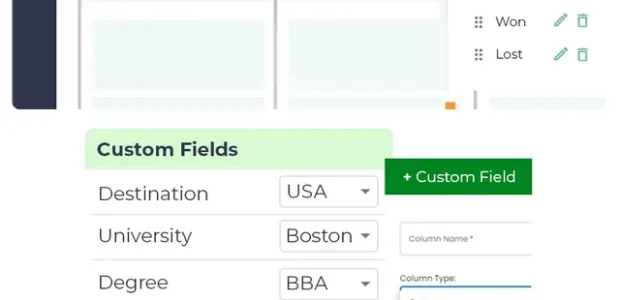
A useful lead record may include the customer’s name, contact details, requested service, preferred timeline, budget where relevant, and previous interactions. Not every field needs to be mandatory. The objective is to collect enough information to support a meaningful conversation without making the enquiry process unnecessarily complicated.
Centralised records also improve team coordination. When a salesperson is unavailable, another authorised team member can review the customer’s history and continue the conversation.
Assign Responsibility for Each Opportunity
A lead management system should make ownership clear. Every active opportunity needs a responsible person or team, along with a defined next action.
For example, a property enquiry may require a viewing appointment, while a marketing agency enquiry may need a discovery call. A solar installation prospect might require an initial assessment before receiving a quotation.
These opportunities follow different processes, so businesses should configure their workflows around the services they provide. Clear ownership reduces the risk of duplicate communication and helps managers identify enquiries that have not received attention.
Use Follow-Up Reminders Consistently
Many prospects do not make a decision during their first conversation. They may need additional information, internal approval, a price comparison, or more time to consider their options.
Without a structured follow-up process, employees may forget to reconnect at the right time. Automated reminders and scheduled tasks can make follow-ups more consistent while allowing staff to personalise each message.
Effective follow-up should reflect the customer’s situation. A prospect waiting for a proposal may need a progress update, whereas someone who has not selected a service may benefit from an answer to a specific question.
How Intelligent Qualification Helps Sales Teams Prioritise Leads
Understand Intent Before Choosing the Next Action
Not every enquiry represents the same level of readiness. Some prospects are researching general options, while others already understand their requirements and want to discuss pricing or availability.
AI lead qualification can help businesses assess incoming enquiries by analysing relevant information, such as responses to predefined questions, stated requirements, service interests, and purchasing timelines. Depending on the system and its configuration, it can organise prospects into categories that support the next stage of the sales process.
For instance, a coaching business could ask about a person’s learning goals, preferred programme, and intended start date. A service provider could ask about the problem that needs solving, the expected timeframe, and the type of assistance required.
These answers help sales teams decide whether to arrange a consultation, provide additional information, or schedule a later follow-up.
AI-generated assessments should be treated as decision-support tools rather than unquestionable conclusions. Incomplete answers, unusual requests, and complex customer needs may require human review.
Make Qualification Questions Relevant
Qualification works best when questions are directly connected to the service being offered. Asking too many questions too early can discourage people from continuing the conversation.
Businesses should identify a small number of useful questions that help determine whether they can meet a prospect’s needs. Additional questions can be introduced as the conversation progresses.
For example, an agency might ask about a prospect’s marketing objectives before discussing its available services. A property professional could ask about location preferences, property type, and purchasing timeframe.
The information collected should help both parties. Customers receive more relevant guidance, while sales representatives gain a clearer understanding of the opportunity.
Keep Human Expertise in the Decision Process
Automation can organise information and handle routine interactions, but people remain important when decisions require judgement, empathy, negotiation, or specialist knowledge.
A qualified prospect may still have concerns about price, service suitability, or implementation. A trained employee can explore those concerns, clarify expectations, and recommend an appropriate solution.
Businesses should therefore define clear handover rules. Complex enquiries, complaints, sensitive information, and requests outside the AI system’s capabilities should be directed to the relevant team member.
Measuring Whether the Sales Process Is Improving
Track Useful Performance Indicators
A more organised workflow should produce measurable results. Businesses can review several indicators to understand whether their processes are improving:
- Initial response time: How quickly the business acknowledges or answers new enquiries.
- Qualification completion rate: The proportion of leads with enough information for a meaningful next step.
- Follow-up completion: Whether planned calls, messages, and appointments happen on schedule.
- Consultation or meeting rate: How often suitable prospects progress to a conversation with the sales team.
- Lead-to-customer conversion rate: The proportion of recorded leads that eventually become paying customers.
- Time spent on administration: Whether employees are spending less time updating records and searching for information.
These measurements should be reviewed together. A high number of qualified leads does not necessarily mean revenue will increase if follow-ups are inconsistent or the service does not meet customer expectations.
Review and Improve the Workflow Regularly
Sales processes should evolve as a business learns more about its customers. Managers can review lost opportunities, common questions, delayed responses, and frequent reasons for disqualification.
If many prospects disappear after receiving a quotation, the business may need to improve how it explains pricing or communicates value. If enquiries repeatedly remain unassigned, the issue may be team responsibility rather than lead quality.
Regular reviews help businesses improve the process instead of assuming that adding more automation will solve every problem.
Choosing Technology That Fits Your Business
The right CRM should support the way a business actually sells its services. Before choosing a platform, managers should consider ease of use, communication integrations, customisable sales stages, reporting, mobile accessibility, data protection, and the ability to review automated decisions.
It is also important to establish appropriate access permissions, retention practices, and procedures for handling customer information. AI features should be transparent enough for employees to understand how recommendations are being used.
Businesses do not need to automate every activity immediately. Starting with enquiry capture, lead assignment, and follow-up reminders can create a stable foundation. More advanced qualification and automation can be introduced once the team understands its workflow and has reliable information to work with.
Conclusion
Turning customer enquiries into sales requires more than collecting contact details. Service businesses need a consistent way to understand customer requirements, prioritise opportunities, coordinate employees, and maintain communication throughout the decision-making process.
By combining organised customer records, relevant qualification questions, timely follow-ups, and human oversight, businesses can build a more dependable sales workflow. The most effective approach is to use technology to reduce repetitive administration and improve decision-making while keeping customer needs at the centre of every interaction.