
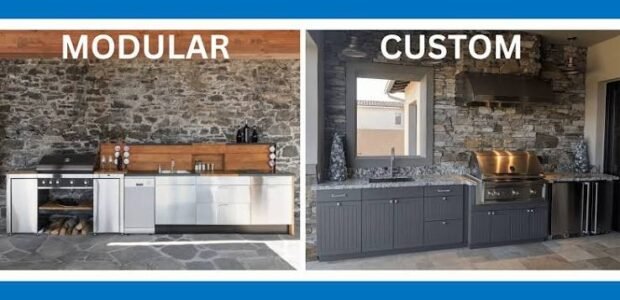

Creating an outdoor cooking area can transform your backyard into a practical space for cooking, entertaining, and relaxing. If you are researching a modular outdoor kitchen Meridian ID homeowners can install with less planning, or considering a fully customized design, understanding the differences between these two options is essential. Both modular and custom outdoor kitchens can include grills, countertops, storage, sinks, refrigerators, and other outdoor appliances, but they differ significantly in design flexibility, installation, cost, and long-term usability.
What Is a Modular Outdoor Kitchen?
A modular outdoor kitchen is built from pre-designed sections or components that are manufactured to fit together. These modules can include grill cabinets, storage units, countertops, islands, refrigerators, and other functional elements.
Instead of designing every component from scratch, homeowners select from available configurations and finishes. The individual pieces are then assembled to create a complete outdoor cooking station.
Benefits of Modular Outdoor Kitchens
Modular kitchens are popular because they can simplify the planning and installation process. Since many components are prefabricated, installation can often be completed more quickly than a completely custom project.
Some common advantages include:
- Faster installation: Pre-built components reduce the amount of on-site construction.
- Predictable design: Homeowners can see available layouts and finishes before making a decision.
- Potentially lower costs: Standardized manufacturing can reduce design and construction expenses.
- Easy configuration: Different modules can be combined to create layouts suited to various backyard sizes.
- Convenient replacement: Individual components may be easier to replace or upgrade than custom-built structures.
For homeowners who want a functional outdoor cooking area without an extensive construction project, modular designs can be a practical option.
What Is a Custom Outdoor Kitchen?
A custom outdoor kitchen is designed and constructed specifically for a particular property, backyard, and homeowner’s requirements. Rather than choosing primarily from pre-manufactured components, homeowners can work with a designer or contractor to determine the layout, materials, appliances, storage, and finishing details.
A custom kitchen can be built around existing landscaping, patios, pools, walls, outdoor seating areas, or unusual property dimensions.
Benefits of Custom Outdoor Kitchens
The biggest advantage of a custom outdoor kitchen is design flexibility. Almost every aspect can be planned around the homeowner’s space and cooking habits.
A custom design may allow you to:
- Choose a unique kitchen layout
- Integrate premium appliances
- Match countertops and finishes with the home’s exterior
- Create specialized storage
- Incorporate seating and entertainment areas
- Work around existing landscaping
- Build a permanent structure that complements the property
Custom outdoor kitchens can be especially useful when a standard modular configuration does not fit the available space.
Modular vs. Custom: Key Differences
Although both options can create a functional outdoor cooking space, there are several factors to consider before choosing between them.
Design Flexibility
Modular kitchens generally provide a selection of predetermined components and layouts. This makes the planning process easier but can limit customization.
Custom kitchens offer significantly more freedom. The size, shape, placement of appliances, countertops, cabinets, and other features can be planned around the specific backyard.
If your property has an unusual layout or you have very specific requirements, customization may provide more design possibilities.
Installation Time
Modular outdoor kitchens can usually be assembled faster because much of the construction occurs before the components reach your property. This can reduce the amount of on-site work.
Custom kitchens typically require more planning and construction. Depending on the design, the project may involve masonry, electrical work, plumbing, gas connections, countertop installation, and other construction steps.
The exact timeline depends on the size and complexity of the project.
Cost Considerations
Budget is another major difference.
A modular kitchen may offer more predictable pricing because many components have standardized designs and dimensions. However, the final cost still depends on appliances, materials, installation, utilities, and additional features.
Custom kitchens can have a wider price range because homeowners can select everything from basic materials to premium appliances and specialized finishes.
Instead of comparing only the initial price, consider the complete project cost, including installation, utility connections, countertops, appliances, lighting, storage, and future maintenance.
Choosing the Right Layout for Your Backyard
The available backyard space should play a major role in your decision. A compact patio may benefit from a simple linear modular setup, while a larger property could accommodate an L-shaped or U-shaped custom kitchen.
A built in outdoor kitchen island Meridian ID homeowners choose can also serve as the central feature of an outdoor entertainment area. An island can provide space for a grill, food preparation, storage, and seating while helping define the cooking zone.
Before selecting a layout, consider:
- Where the kitchen will be located
- How people will move around the space
- Distance from the indoor kitchen
- Existing patio or landscaping
- Shade and weather exposure
- Gas, water, and electrical access
- Seating requirements
- Storage needs
- Placement of outdoor appliances
A well-planned layout should make cooking and entertaining convenient rather than creating unnecessary traffic through the backyard.
Appliances and Features to Consider
Whether you choose modular or custom construction, the appliances should reflect how you intend to use the kitchen.
Popular outdoor kitchen features include built-in gas or charcoal grills, side burners, outdoor refrigerators, sinks, ice makers, storage cabinets, trash and recycling compartments, pizza ovens, and beverage stations.
You may also want practical additions such as task lighting, electrical outlets, weather-resistant cabinets, countertop space, and comfortable bar seating.
However, adding every available feature is not always necessary. Prioritize the appliances and features you will actually use.
Materials and Durability Matter
Outdoor kitchens are exposed to heat, sunlight, moisture, wind, and seasonal temperature changes. Material selection therefore matters for both modular and custom installations.
Common materials include stainless steel, stone, concrete, brick, porcelain, and other outdoor-rated surfaces. Cabinets and countertops should be selected for outdoor conditions rather than simply using indoor kitchen materials.
Proper construction and weather-resistant materials can help protect appliances and surfaces while reducing maintenance requirements over time.
Which Outdoor Kitchen Option Should You Choose?
There is no single solution that works for every homeowner.
A modular outdoor kitchen may make sense if you want a straightforward design, faster installation, standardized components, and potentially more predictable project costs.
A custom outdoor kitchen may be more appropriate if you want a unique layout, specific materials, specialized appliances, or a kitchen designed precisely around your property.
Your decision should ultimately depend on your backyard, budget, cooking habits, desired features, and how permanent and personalized you want the space to be.
Final Thoughts
Both modular and custom outdoor kitchens can create a valuable extension of your home’s living space. Modular systems offer convenience and standardized construction, while custom kitchens provide greater flexibility for homeowners with specific design requirements.
Before starting your project, evaluate the available space, determine which appliances you need, establish a realistic budget, and consider how the kitchen will connect with your existing patio and backyard. Whether you choose a modular system or a custom-built design, careful planning can help create an outdoor kitchen that is functional, durable, and enjoyable for years to come.